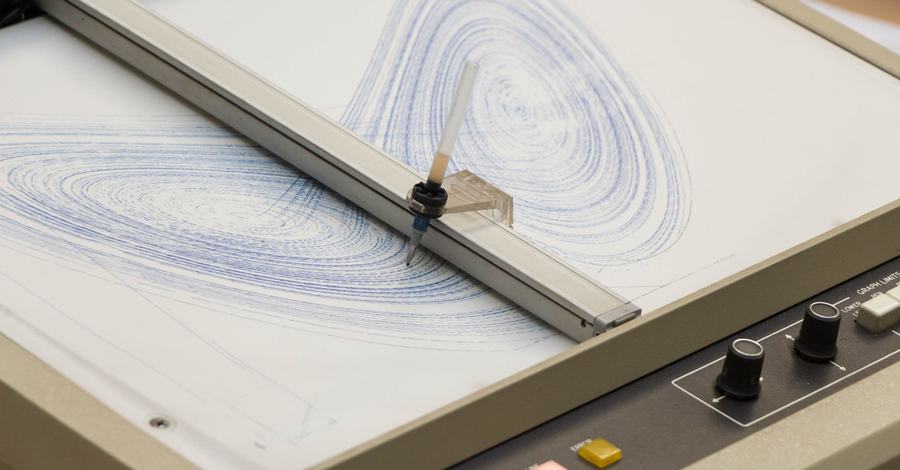
Lead story: MIT researchers add an energy-dissipation constraint so machine-learning models of chaotic systems stay physically bounded over long forecasts. Also in this briefing are simulation software news from Comsol and Siemens and a Starship ship catch at Boca Chica.
MIT team constrains AI models of chaos to stay physically bounded
Researchers at MIT's Laboratory for Information and Decision Systems describe a method that keeps machine-learning models of chaotic systems from producing impossible values. In a PNAS paper by Sunbochen Tang, Navid Azizan and Themistoklis Sapsis, the model learns an energy-like function plus a boundary that confines its behavior. A projection layer then makes energy dissipation a rigid requirement. The authors say predictions stay bounded however long the forecast runs. On well-known physical systems, from textbook examples to intricate multidimensional ones, the constrained models tracked real behavior closely, whereas standard techniques quickly strayed to outputs that could not occur in reality. The team is releasing supporting information freely.
Why it matters: Long-horizon rollouts are where data-driven surrogates tend to fail, so a built-in guarantee of bounded behaviour could change how such models are checked. Boundedness is not accuracy, though, and validation against data would still be needed.
Source: MIT News — New approach enables physically consistent AI models of chaotic systems
Comsol 2027 adds systems modelling, motor tools and AI agent links
Engineering.com reports from Comsol Conference 2026, held October 7 – 9 in Burlington, Massachusetts. Comsol 2027 adds Comsol Systems, which joins Electrical Circuit, Flowsheet and Generic System interfaces and includes a library of 5000 electrical component models, with SPICE import. An MCP server lets AI agents build models, and an Electric Motor Module offers a time-periodic solver and efficiency maps. Chatbots, Application Builder and Java Shell come to Mac and Linux. Rui Aguiar of Cosmon told attendees that engineers must state objectives and validate AI output, and showed an agent-built model with 0.2% deviation from a measured result.
Why it matters: Agent-assisted model building is moving into mainstream simulation tools, which puts more weight on well-defined boundary conditions and independent validation. The speaker's emphasis on human domain knowledge is a useful guide for review practices.
Source: Engineering.com — Comsol Conference 2026 highlights: Simulation and AI
Siemens plans to offer Simcenter X on Microsoft Azure
Siemens has announced plans to make its Simcenter X software available through Microsoft Azure and Microsoft Marketplace. Simcenter X is a Software-as-a-Service, multi-domain simulation suite that gives access to simulation apps, AI technologies and high-performance computing. According to Siemens, the aim is to give engineering organizations more choices for cloud deployment and scalable HPC for complex workloads. The company notes more than 35 years of collaboration with Microsoft, including Teamcenter X, Designcenter X and Polarion X on Azure. Siemens will show its vision for Simcenter X on Azure at Microsoft Ignite 2026 in San Francisco, with a session by Joel Davison on November 19th.
Why it matters: Cloud-hosted solvers could affect how teams size compute for large analyses and share models across disciplines. This is a plan rather than a release, so details on deployment and availability remain to be seen.
Source: Engineering.com — Siemens plans Simcenter X on Azure and Marketplace
Starship catch shows test-driven development at full scale
Aerospace Testing International reports that on November 14, 2026, the tower arms at Boca Chica caught Ship 42. It had lifted off 22 and a half hours before and orbited the Earth about 14 times. This was the first time an upper stage came back from orbit and was caught, although the Super Heavy booster, number 22, was lost on the same flight. The heat shield has about 18,000 ceramic tiles rated to about 2,600°F (1,400°C). SpaceX said cameras on three of the 26 Starlink V3 satellites photographed the tiles in orbit, and the images showed them in suitable condition to come back through the atmosphere. Controllers cleared the vehicle at three go/no-go decision points.
Why it matters: The programme shows how in-flight inspection data and staged go/no-go criteria can feed real-time decisions on high-consequence tests. It also illustrates how heavily test results and simulation inform one another in a hardware-rich development approach.